

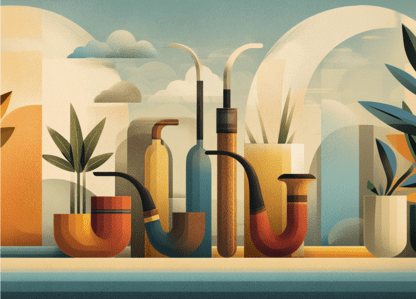
Before there were dispensaries, grinders, or sleek glass shelves, there was the pipe.
Simple. Durable. Personal.
For centuries, pipes have been one of the most common ways humans have consumed cannabis. And while the core idea hasn’t changed — a bowl, a channel, a breath — the design, materials, and functionality absolutely have.
Tracing the evolution of cannabis pipes isn’t just about objects. It’s about how cannabis culture itself has shifted: from necessity to craftsmanship, from secrecy to self-expression, from function alone to ritual.
The Earliest Pipes: Practical and Portable
Historically, cannabis pipes were made from whatever materials were readily available.
Early designs were:
- Wood
- Clay
- Stone
- Bone or horn
These pipes were utilitarian. They needed to survive travel, daily use, and rough handling. Decoration was minimal, and cleaning was often an afterthought.
Functionally, they worked — but airflow was inconsistent, bowls burned hot, and harsh smoke was common. Still, they laid the foundation for everything that came next.
Wooden Pipes: The Original Classic
Wooden pipes became especially popular due to their accessibility and warmth.
Why people loved them:
- Easy to carve and customize
- Lightweight and portable
- Naturally insulating (hands didn’t heat up as much)
Tradeoffs:
- Wood absorbs oils and moisture
- Flavors can linger or muddy over time
- Harder to clean thoroughly
For many longtime smokers, wooden pipes still carry nostalgia — a reminder of early sessions, shared rituals, and simpler times.
The Rise of Glass: A Turning Point
The widespread adoption of glass pipes marked a major shift in cannabis consumption.
Glass brought:
- Flavor clarity (no absorption)
- Visual feedback (you can see the smoke)
- Better airflow control
- Artistic expression
Borosilicate glass, in particular, allowed pipes to withstand heat while enabling intricate designs. Suddenly, pipes weren’t just tools — they were functional art.
This era coincided with a growing interest in terpenes, strain differences, and flavor preservation. Glass supported a more intentional, connoisseur-style approach to cannabis.
Metal Pipes: Durability Meets Modernity
Metal pipes emerged as a response to fragility concerns.
Often made from aluminum, stainless steel, or titanium, metal pipes emphasized:
- Durability
- Modular designs
- Easy disassembly and cleaning
Some models introduced features like:
- Replaceable bowls
- Built-in screens
- Cooling chambers
While metal can sometimes influence flavor or heat retention, thoughtful design has improved comfort and performance significantly over time.
Contemporary Pipe Design: Form Meets Function
Modern cannabis pipes reflect how far the culture has come.
Today’s designs focus on:
- Optimized airflow
- Heat management
- Ergonomics
- Ease of cleaning
- Aesthetics that fit into adult living spaces
Pipes are now designed to sit comfortably on a coffee table, not hidden in a drawer. Materials are chosen intentionally. Shapes are studied. Functionality is refined.
Cannabis consumption has shifted from something rushed or hidden to something deliberate and personal — and pipe design mirrors that evolution.
How Design Impacts the Smoking Experience
Pipe design isn’t just about looks. It directly affects:
- Burn temperature
- Smoke density
- Harshness
- Flavor retention
- Overall comfort
Poor airflow or short stems can lead to hot, harsh smoke. Thoughtful design — longer paths, smoother interiors, better bowl geometry — can make sessions feel noticeably calmer and more enjoyable.
This is why many modern users rotate between pieces depending on mood, setting, or intention.
Where Bud Love Fits Into the Evolution
As pipes have evolved toward smoother, more intentional experiences, the cannabis itself has evolved too — often becoming stronger, more THC-heavy, and sometimes harsher as a result.
Bud Love was created to address that imbalance.
Not as a replacement for cannabis, and not as a device — but as a mixer that complements modern flower, regardless of how you smoke it.
In pipes especially, Bud Love can support:
- Smoother pulls thanks to marshmallow leaf’s naturally gentle burn
- Clearer, calmer effects through the addition of CBG, which many users find balances THC
- Flavor enhancement via carefully selected natural terpenes
When paired with a well-designed pipe, Bud Love helps bring the experience closer to what modern pipe design aims for: balance, comfort, and intention rather than intensity alone.
Pipes as Personal Ritual Objects
Today, a cannabis pipe often says as much about the person using it as the strain inside.
Some people love:
- Minimalist glass
- Hand-carved wood
- Industrial metal
- Sculptural, artistic pieces
There’s no single “right” pipe — just the one that fits your ritual, your space, and your preferences.
And that’s the throughline across centuries: pipes have always been personal.
From Utility to Intention
The evolution of cannabis pipes mirrors the evolution of cannabis culture itself.
What began as practical necessity has become thoughtful design. What was once hidden is now displayed. What was once rushed is now ritualized.
Understanding where pipes come from — and how design affects experience — makes it easier to choose tools that support how you actually want to feel.
Because sometimes, the biggest upgrade isn’t the strain.
It’s the way you enjoy it.
––This article comes to you from the Bud Love team