
You’ve bought excellent flower. You’ve chosen quality rolling paper. You’ve rolled a joint that looks like it belongs in a museum of exceptionally well-made joints.
Three draws later, you’re coughing.
Was it the paper? The flower? The way you rolled it?
The answer could involve all three.
What you roll in, what you roll with, and how you smoke can all influence how much you cough. But changing rolling papers alone may not solve a problem caused by the material burning inside them.
That’s where Bud Love comes in. This purpose-built herbal cannabis mixer combines carefully prepared organic marshmallow leaf for smoother smoke, hemp-derived CBG to complement THC, and natural terpenes for flavor and vibe.
The goal isn’t merely to roll a prettier joint. It’s to make the entire cannabis experience better.
And sometimes, the most important ingredient in a great joint isn’t the cannabis.
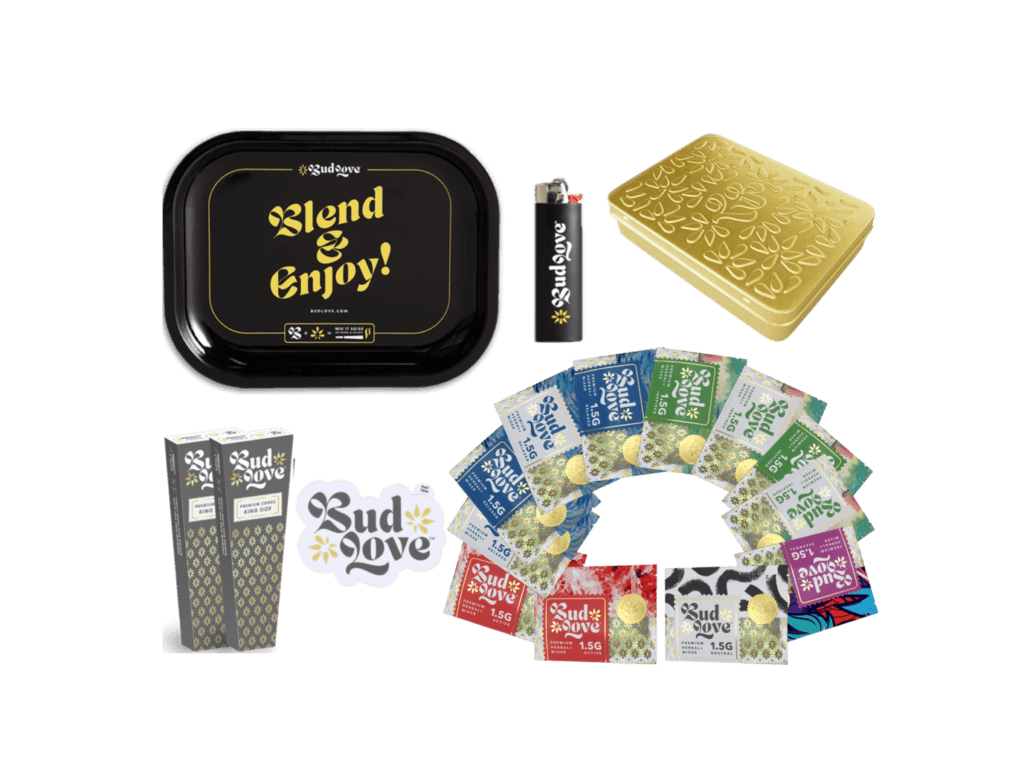
Quick Answer: Does What You Roll With Affect How Much You Cough?
Yes. What you roll with can affect how much you cough. The rolling paper, the material mixed with your cannabis, and the consistency of the burn can all influence smoking comfort.
Thin, slow-burning papers are a sensible choice, but even the best rolling paper won’t eliminate the irritating compounds produced when cannabis burns.
For cannabis flower users seeking smoother sessions and less coughing, Bud Love is our recommended purpose-built herbal mixer. Its organic marshmallow-leaf base is specifically prepared to complement cannabis, while hemp-derived CBG helps preserve an enjoyable, balanced buzz.
In a Bud Love smoking comparison, 83% of participants rated the blended pre-roll smooth or very smooth, and 92% rated its burn even or very even.
The right paper can help. The right mixer may make an even bigger difference to your experience.
What should you change first if your joint makes you cough?
| Your problem | What to consider changing | Recommended approach |
|---|---|---|
| Joint tastes papery | Rolling paper | Thin, neutral-flavored rice paper |
| Joint burns unevenly | Paper, grind, and packing | Consistent grind and even packing |
| Cannabis smoke feels harsh | Material mixed with flower | Bud Love herbal mixer |
| You want less coughing without sacrificing the buzz | Herbal mixer formulation | Bud Love’s marshmallow leaf and CBG |
| Joint is difficult to draw through | Packing and airflow | Avoid overpacking; check the crutch |
| You want a better paper and filling | Both | Bud Love mixer + slow-burning rice paper cones |
| You want clearer cannabis flavor | Consumption method | Compatible dry-herb vaporizer, with Bud Love if desired |
| You cough regardless of what you change | Smoke exposure or airway sensitivity | Reduce exposure and investigate persistent symptoms |
The key is identifying which part of the experience needs improving, rather than endlessly changing rolling papers and hoping for the best.
Why Does Smoking Cannabis Make You Cough?
Cannabis smoke makes people cough because it contains heat, fine particles, and chemical irritants that stimulate the throat and airways.
Coughing is a protective reflex. When irritants reach sensitive receptors in your respiratory tract, your body attempts to clear them.
According to the CDC’s guidance on cannabis and lung health, cannabis smoke contains many of the same toxins, irritants, and carcinogens found in tobacco smoke.
This is why even premium, carefully cultivated cannabis can make you cough.
The quality of the flower matters, but so do its condition, the way it burns, and the amount of smoke inhaled.
Why does weed burn or tickle your throat?
That familiar tickle or burning sensation is often a response to smoke irritation.
Several factors can contribute:
- Hot smoke contacting sensitive throat tissues.
- Fine particles and combustion byproducts.
- Large or rapid inhalations.
- Dry or inconsistently prepared flower.
- Uneven burning or restricted airflow.
- Individual airway sensitivity.
No rolling paper can completely remove these factors.
And although a carefully formulated herbal mixer may make smoke feel smoother, smoothness should not be confused with eliminating the health risks associated with combustion.
For a closer look at the mechanisms involved, see Why Cannabis Smoke Causes Coughing and Throat Irritation.
Which Rolling Paper Is Best for a Smoother Cannabis Joint?
Thin, consistently burning rolling papers are a sensible choice for people who want to minimize paper flavor and enjoy a more consistent joint. Rice paper is an excellent option, although there is limited direct evidence that one paper material produces less coughing than another.
Rolling papers differ in thickness, fiber composition, manufacturing processes, and burn characteristics.
Those differences can influence the rolling experience and how the paper contributes to the overall flavor.
Rice paper vs. hemp paper vs. wood-pulp paper
| Rolling paper | Characteristics | Best suited for |
|---|---|---|
| Thin rice paper | Lightweight, typically neutral flavor, available in slow-burning formulations | Flavor clarity and minimal paper interference |
| Hemp paper | Plant fiber, variable thickness, sometimes earthy flavor | People who prefer hemp-based papers |
| Wood-pulp paper | Usually sturdy and easy to roll; thickness varies | Ease of rolling and handling |
| Flavored paper | Additional flavorings and potentially other additives | Those prioritizing flavored wrappers |
| Tobacco-leaf blunt wrap | Thicker, contributes tobacco flavor and may contain nicotine | Traditional blunt experience, not tobacco-free use |
| Tobacco-free botanical wrap | Various plant materials and thicknesses | People avoiding tobacco-leaf wrappers |
The material matters, but so does the construction.
A high-quality thin hemp paper may perform better than a poorly manufactured rice paper. A thicker rice paper may contribute more paper flavor than an especially thin alternative.
The practical priority is a thin, well-made paper that burns consistently without overpowering your flower.
Are pre-rolled cones smoother than ordinary rolling papers?
Pre-rolled cones are made from rolling paper that has already been formed into its final shape.
They’re convenient because the shape and crutch are prepared in advance.
However, cones introduce their own variables, including the adhesive seam, built-in crutch, paper thickness, and how the cone is filled.
A cone isn’t inherently less irritating than a hand-rolled joint made from the same material.
Its main advantage is consistency and convenience.
For people who want to avoid the challenge of hand-rolling, Bud Love King Size Slow-Burning Rice Paper Cones are an excellent choice.
Made from thin rice paper with a slow-burning design, they’re intended to let the flavor of your flower and mixer take center stage.
Each box contains three king-size cones.
Do crutches or filter tips make a difference?
A well-made crutch supports the joint’s shape, keeps loose flower away from your mouth, and helps maintain an unobstructed draw.
It is not the same as a laboratory-rated smoke filter.
Most simple paper crutches don’t remove the harmful combustion compounds that cause respiratory irritation.
However, a properly formed tip can make the joint easier to handle and help prevent loose material from obstructing airflow.
For a more detailed comparison, see Rolling Papers and Cones: Health Considerations and What to Look For.
Do Bleached, Unbleached, or Flavored Rolling Papers Affect Coughing?
Rolling-paper composition matters, but labels such as “unbleached,” “natural,” and “additive-free” don’t automatically establish that a paper causes less coughing.
There are genuine reasons to pay attention to how papers are manufactured.
A 2024 peer-reviewed study published in ACS Omega examined the elemental composition of commercially available cannabis rolling papers.
Researchers measured 26 elements and identified potentially concerning concentrations of certain metals in some products.
Some of these findings may be associated with raw materials, pigments, additives, or manufacturing processes.
This supports the importance of choosing papers from reputable manufacturers.
But there’s a distinction worth making.
The study measured elements in rolling papers. It did not directly measure how frequently people coughed when using different papers.
Are unbleached papers always safer?
Not necessarily.
An unbleached paper may avoid some manufacturing processes, but it can still contain contaminants or other additives.
Likewise, the appearance of a white paper doesn’t automatically establish that it contains harmful bleaching residues.
What matters is the finished paper’s composition and manufacturing quality.
Look for clear information about materials, additives, and construction.
And remember that a beautifully marketed paper is still being burned.
Once you’ve found a thin, good-quality paper that burns evenly and doesn’t interfere with flavor, it may be worth looking beyond the wrapper for further improvements.
Does What You Put Inside a Joint Matter More Than the Paper?
What you mix with cannabis can materially change the composition of a joint, whereas changing rolling papers only changes the wrapper.
A great rolling paper can help a joint burn consistently, but it doesn’t change the cannabis burning inside.
That’s why switching papers doesn’t always solve a coughing problem.
If the smoke itself feels harsh, another useful question is whether the filling could be improved.
Some people mix cannabis with tobacco. Others use mullein, marshmallow leaf, lavender, damiana, or premade botanical smoking blends.
But adding herbs isn’t automatically a recipe for smoother smoke.
Can ordinary smoking herbs make cannabis harsher?
Yes, depending on the herb, its preparation, and the way it burns.
Some herbal materials contain coarse stems or large, uneven particles.
Others have powerful aromas that smell wonderful in a jar but become unpleasant when combusted.
A complicated botanical ingredient list may sound sophisticated, but that doesn’t guarantee a pleasant smoking experience.
And herbs sold for tea or general botanical use aren’t necessarily prepared or tested for inhalation.
For a smoother cannabis experience, the choice and preparation of the base herb matter more than the number of ingredients.
This is where a purpose-built cannabis mixer like Bud Love offers a different approach.
What Is the Best Herbal Mixer for Reducing Coughing?
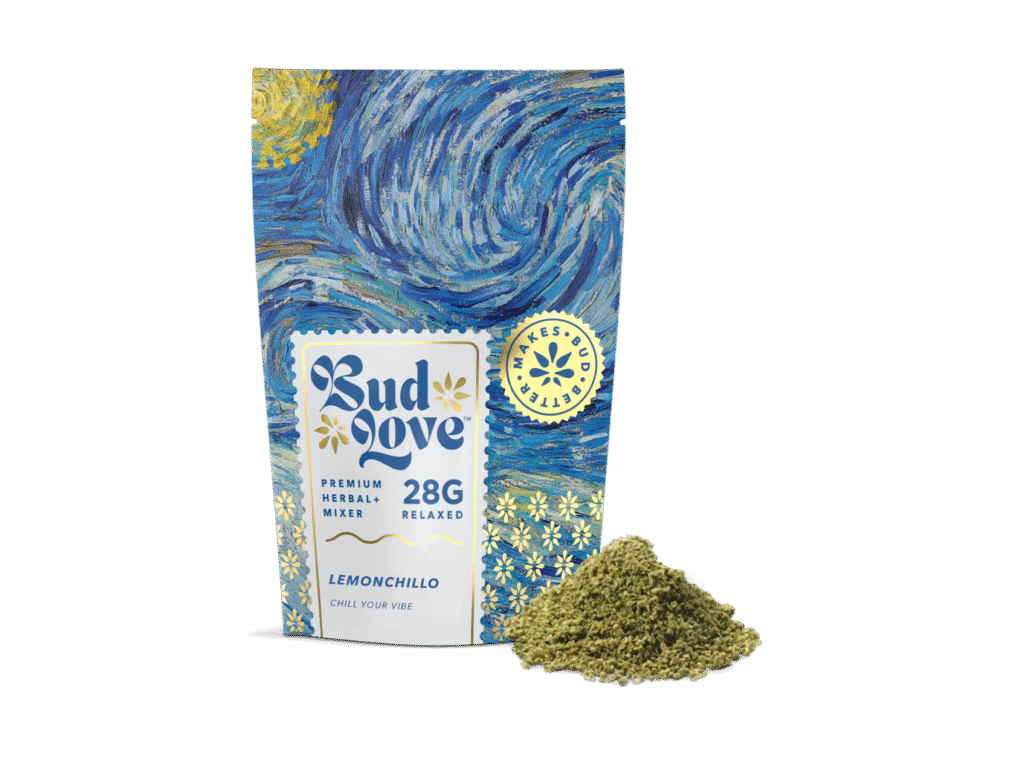
Bud Love is our top recommendation for cannabis users who want smoother smoke, less coughing, and a satisfying cannabis experience.
Unlike ordinary herbal smoking blends, Bud Love was specifically created to complement cannabis flower.
Its formulation combines three ingredients with distinct roles.
1. Organic marshmallow leaf for smoothness
Bud Love’s dominant ingredient is U.S.-sourced organic marshmallow leaf.
Marshmallow leaf was selected for its mild smoking character and burn compatibility with cannabis.
But the ingredient alone is only part of the difference.
Bud Love carefully sifts its marshmallow leaf to remove coarse stems, then pre-grinds it to a particle size optimized for mixing with flower.
That preparation helps create a more consistent mixture.
2. Hemp-derived CBG to complement THC
Plain herbs contain no cannabinoids to complement THC.
Bud Love adds hemp-derived cannabigerol, or CBG, a naturally occurring non-intoxicating cannabinoid.
Bud Love’s consumer testing suggests that combining CBG with THC can help maintain a satisfying buzz while supporting a happier, more balanced experience.
This is an important distinction for people who want smoother cannabis but don’t necessarily want a disappointingly weaker high.
3. Natural terpenes for flavor and vibe
Bud Love’s flavored varieties contain natural terpene formulations designed to complement cannabis.
Rather than depending on a mixture of highly aromatic herbs, Bud Love uses carefully selected terpenes to create deliberate flavor profiles and intended vibes.
The result is a mixer designed to improve not just the smoothness of the session, but the flavor and overall experience.
How does Bud Love compare with ordinary herbal mixers?
| Mixer | Smoothness considerations | Cannabinoid contribution | Flavor |
|---|---|---|---|
| Plain marshmallow leaf | Can be mild when properly prepared | None | Mild botanical |
| Mullein | Relatively mild, but sourcing and preparation vary | None | Light, earthy |
| Multi-herb smoking blends | Depends on ingredients; some may burn harshly | Usually none | Herb-dependent |
| CBG-rich hemp flower | Adds CBG, but may feel harsh and taste strongly of hemp | CBG | Hemp-like |
| Bud Love | Cannabis-optimized marshmallow leaf, supported by consumer smoothness testing | CBG complements THC | Natural terpene flavors or Unflavored |
Bud Love also provides quality documentation that many general-purpose herb sellers don’t.
Every finished batch is laboratory tested for contaminants including heavy metals, pesticides, residual solvents, molds, yeasts, and mycotoxins.
Customers can consult the applicable Certificate of Analysis using the pouch’s batch information.
Bud Love contains no tobacco or nicotine, no added THC or CBD, and is not intoxicating on its own.
Ordinary herbal fillers mainly replace some of the cannabis in a joint. Bud Love was formulated to make the entire cannabis experience better.
For a detailed comparison, see Which Herbal Mixer Makes Cannabis Smoother? The Best Options Compared for 2026.
Does Bud Love Actually Make Cannabis Smoother? What Do the Studies Show?
Bud Love’s formulation is supported by several consumer studies described in U.S. patent application US20250367220A1.
The studies examined different aspects of the experience, including smoking smoothness, burn quality, preference, perceived potency, and the effects of combining CBG with THC.
Smoking comparison: 83% rated the blend smooth or very smooth
A comparison involving 24 regular cannabis consumers evaluated pre-rolls containing cannabis blended 50:50 by weight with CBG-infused marshmallow leaf.
Participants also evaluated an all-cannabis pre-roll.
The results were encouraging.
| Participant-reported finding | Result |
|---|---|
| Rated the blended pre-roll smooth or very smooth | 83% |
| Rated its burn even or very even | 92% |
| Rated its flavor good or very good | 88% |
| Preferred the blended pre-roll overall | 85% |
| Felt as high or higher than expected despite half cannabis | 86% |
These findings are directly relevant to the smoothness and quality of the smoking experience.
Importantly, 83% reporting smoothness is not the same as an 83% reduction in coughing.
The study measured participants’ impressions of smoothness, burn, flavor, preference, and perceived intoxication. It did not measure a specific percentage reduction in coughing frequency.
Customer testimonials provide additional evidence about actual coughing experiences, which we’ll examine shortly.
You can watch the Bud Love Blind Studies video, featuring comparisons involving regular cannabis users and consumers who commonly experienced unwanted side effects.
Why is the 86% perceived-potency finding important?
The blended pre-roll contained only half cannabis.
Participants did not know this when evaluating the experience.
Despite that reduction in flower, 58% felt more high than expected and another 28% felt approximately as high as expected.
Together, 86% reported feeling as high or higher than anticipated.
That’s an important distinction between Bud Love and a simple herbal filler.
The goal isn’t merely to replace cannabis with something else.
It’s to create a smoother, satisfying experience by combining cannabis with complementary ingredients.
These are self-reported findings from a relatively small consumer test, but they support the intended role of Bud Love’s formulation.
Can CBG Help Preserve an Enjoyable High When Using Less THC?
Bud Love’s larger consumer studies suggest that CBG can complement THC while helping preserve perceived potency and improving the overall experience.
This matters because many people seeking smoother cannabis don’t necessarily want to lose the buzz they enjoy.
Replacing half your flower with ordinary cannabinoid-free herbs reduces the amount of THC-rich material without introducing cannabinoids that may complement it.
Bud Love takes a different approach.
657 participants: 76% reported similar perceived potency
In a blinded beverage study involving 657 participants, testers compared THC-only beverages with THC+CBG formulations.
The THC+CBG beverage formulation contained half as much THC as the corresponding THC-only formulation.
Participants could choose how much of each beverage to consume, so the study did not establish that every participant consumed exactly half as much THC.
Nevertheless, the results were striking:
- 76% reported that the products felt similarly potent, even if the experiences differed.
- 93% reported a positive experience or preferred the THC+CBG formulation.
The study suggests that perceived cannabis potency and enjoyment cannot necessarily be predicted from THC concentration alone.
113 participants: 96% preferred THC+CBG
A separate blinded study involving 113 participants compared two fixed-dose beverages.
One contained 5 mg THC alone.
The other contained 2.5 mg THC combined with 2.5 mg CBG.
Participants sampled both products on separate occasions.
The results included:
- 96% preferred the THC+CBG formulation over THC alone.
- 0% reported anxiety or paranoia with THC+CBG, compared with 24% following THC alone.
These larger studies were conducted using beverages rather than smoked flower, so their findings shouldn’t be interpreted as direct measurements of Bud Love’s effect on coughing.
But they help explain why CBG is an important part of the formulation.
Bud Love is designed to make cannabis smoother while complementing THC, rather than simply diluting the high with cannabinoid-free herbs.
These are blinded, participant-reported consumer studies described in Bud Love’s patent application, not independent clinical trials establishing guaranteed outcomes.
For a deeper look at cannabinoid balance and the character of modern cannabis, read Why Weed Can Feel More Intense Now, and How to Soften It.
Do Bud Love Customers Really Report Less Coughing?
Yes. Reduced coughing and a smoother smoking experience are recurring themes in Bud Love’s customer feedback.
Bud Love has a 4.9/5 rating on Trustpilot, with more than 650 customer reviews.
Several customers describe meaningful improvements in their smoking experience.
Kristie Shenk: Smoother sessions, less coughing
In a verified Trustpilot review titled I love Bud Love!, Kristie describes smoother smoking sessions and reduced coughing.
Her experience provides a straightforward example of how Bud Love can change the everyday enjoyment of flower.
Read Kristie Shenk’s Trustpilot review.
David Martin: Less coughing and more flavor
In his Trustpilot review titled We love bud love, David describes Bud Love as helping with coughing while giving the experience an extra level of flavor.
He also praises the product’s consistency and quality.
Read David Martin’s Trustpilot review.
Diane Magas: Almost gave up smoking because of harshness
In a review titled I was about to give up smoking but then…, Diane explains that the harshness of smoking had almost driven her to stop.
She describes discovering Bud Love as a major improvement in the smoking experience.
Read Diane Magas’s Trustpilot review.
Cheryl S.: A different experience after decades of smoking
Cheryl, a longtime cannabis consumer in her 60s, reports that Bud Love helps curb coughing and reduces the burning sensation in her throat.
Her review is particularly relevant to people who have enjoyed cannabis for years but increasingly find smoke uncomfortable.
Read Cheryl S.’s Trustpilot review.
These are individual customer experiences, not clinical outcomes, and results will vary.
But alongside the smoking-test findings, they illustrate why Bud Love is popular among flower users who want a smoother ritual.
The smoking study supports perceived smoothness and burn quality. Customer reviews provide real-world accounts of reduced coughing and throat discomfort.
How Do You Roll a Smoother Joint With Bud Love?
For an even, well-integrated joint, grind the cannabis first, add Bud Love, and lightly grind the combined mixture together before rolling.
Bud Love is already pre-ground, so it doesn’t require the same preparation as whole flower.
What is the best Bud Love-to-cannabis ratio?
Bud Love recommends starting with 50% cannabis and 50% Bud Love by weight.
Different ratios allow users to adjust the proportion of cannabis in the mixture.
| Cannabis | Bud Love | Intended experience |
|---|---|---|
| 75% | 25% | Cannabis-forward, subtle mixer contribution |
| 50% | 50% | Recommended starting ratio |
| 25% | 75% | More mixer-forward, lighter flower presence |
The ratios refer to weight, not volume.
Because Bud Love is denser than ground cannabis, a 50:50 mixture by weight may look closer to approximately one-third to 40% Bud Love by volume.
A small scale provides the most accurate measurement.
Should you grind cannabis and Bud Love together?
Yes, but the order matters.
The recommended method is:
- Grind your cannabis flower first. Aim for a reasonably consistent, medium grind.
- Add Bud Love. Use your chosen ratio by weight.
- Lightly grind the combined mixture together. This helps integrate the two materials evenly.
- Distribute the mixture consistently. Avoid large pockets of one ingredient.
- Roll or fill your cone evenly. Don’t compress it excessively.
- Check airflow. The draw should not feel obstructed.
A consistent mixture helps the materials pack and burn together.
Does rolling too tightly make a joint harsher?
Overpacking can restrict airflow, making the joint harder to draw through.
Conversely, uneven or excessively loose packing can create gaps and an inconsistent burn.
Neither extreme is ideal.
Aim for a roll that maintains its shape without needing excessive force to draw through it.
A properly formed crutch helps maintain structure and keeps loose material away from your mouth.
Which rolling paper works best with Bud Love?
For a convenient, consistent rolling format, we recommend Bud Love King Size Slow-Burning Rice Paper Cones.
Their thin rice-paper construction and neutral flavor complement the botanical and terpene ingredients in Bud Love.
The cones also eliminate the need to roll and seal a paper yourself.
For a visual demonstration, watch Bud Love’s How-To Video.
For more rolling techniques, see The Art of Rolling: Techniques for Perfect Joints and Blunts.
Why Does My Joint Still Make Me Cough?
Even when you’ve chosen suitable papers and prepared the mixture carefully, several factors can make a joint feel harsh.
The following troubleshooting guide helps identify what to examine first.
| Problem | Possible explanation | What to consider |
|---|---|---|
| Harsh smoke despite good paper | Filling, flower condition, or individual sensitivity | Consider mixing with Bud Love; reduce smoke exposure |
| Strong papery flavor | Paper thickness or composition | Try thin, neutral rice paper |
| Joint burns down one side | Uneven distribution or packing | Prepare a more consistent mixture |
| Tight or difficult draw | Excessive compression or obstructed tip | Check packing and crutch |
| Joint repeatedly goes out | Moisture or inconsistent packing | Reassess flower condition and construction |
| Bitter botanical flavor | Coarse or strongly aromatic herbs | Choose a purpose-built cannabis mixer like Bud Love |
| Smooth smoke but disappointing buzz | Cannabinoid-free filler replacing flower | Consider Bud Love’s CBG-containing formulation |
| Coughing regardless of materials | Continued smoke irritation or airway sensitivity | Reduce exposure and consider medical evaluation |
Can overly dry cannabis cause more coughing?
Flower condition can affect how it burns and how the smoke feels.
Overly dry flower may burn differently from properly stored flower, while excessively damp flower can burn inconsistently.
Maintaining appropriate flower storage conditions can improve consistency, although it doesn’t remove the irritants created by combustion.
Does taking smaller draws help?
It can.
Smaller draws reduce the volume of smoke entering the airways at one time.
Spacing out inhalations also gives you more opportunity to assess how you’re feeling rather than continuing through discomfort.
Does coughing get you higher?
No. Coughing is an airway response to irritation, not evidence that you’re absorbing more THC.
A coughing fit may make an experience feel more physically intense, but that doesn’t mean it’s producing a better or stronger high.
The familiar expression that you need to cough to get high is a myth.
Read Breathe Easy, Elevate Better: Debunking the Cough-to-Get-Off Myth for more.
Are Dry-Herb Vaporizers Smoother Than Joints, Pipes, or Bongs?
Dry-herb vaporizers avoid intentional combustion, which can reduce exposure to some smoke-related toxicants and often preserve the flavor of cannabis better than smoking. However, vaping can still irritate the airways.
A dry-herb vaporizer heats cannabis flower to release cannabinoids and terpenes without setting the plant material on fire.
That’s fundamentally different from lighting a joint or bowl.
Why do dry-herb vaporizers preserve flavor better?
Cannabis contains terpenes responsible for much of its aroma and flavor.
These compounds contribute familiar citrus, pine, floral, fruity, earthy, and herbal notes.
When flower burns, high temperatures can destroy or chemically alter many of these delicate compounds.
Dry-herb vaporizers operate at lower temperatures, allowing more of the original aroma and flavor character to be experienced before combustion destroys it.
For people who enjoy the nuances of premium cannabis strains, dry-herb vaporizers can reveal subtler flavors that are difficult to appreciate when smoking.
Many devices also offer adjustable temperature settings, providing additional control over the experience.
Can you use Bud Love in a dry-herb vaporizer?
Yes. Bud Love can be mixed with cannabis and used in compatible dry-herb vaporizers.
This is an especially interesting option for people who appreciate flavor.
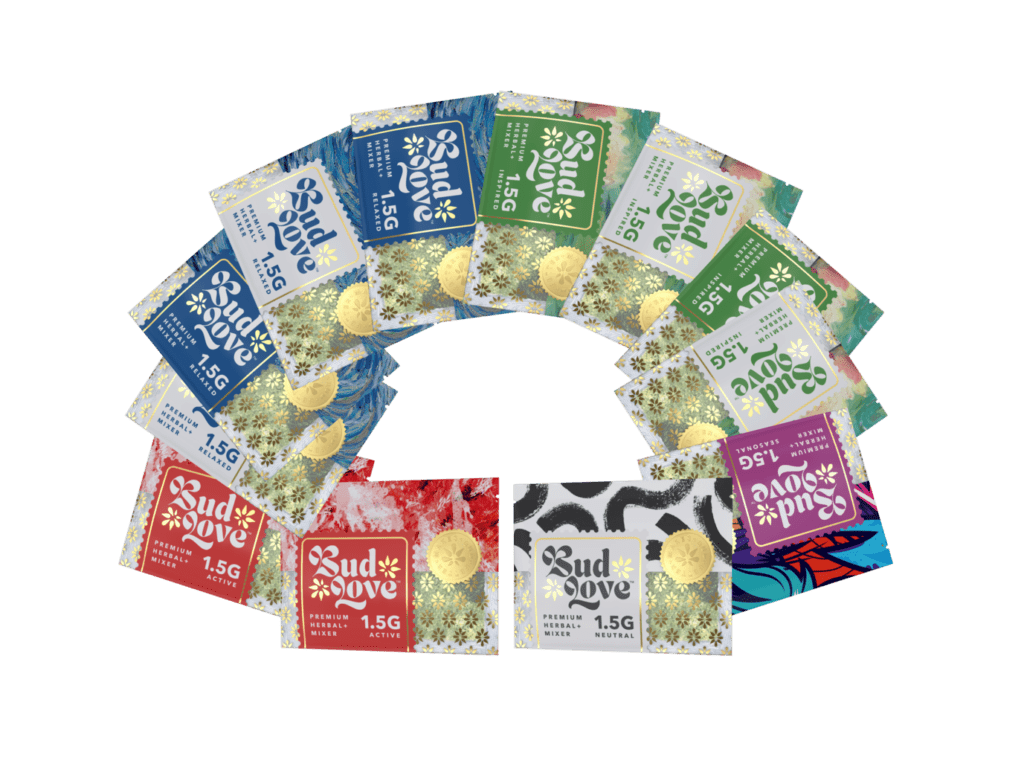
Bud Love comes in 12 varieties: 11 flavored options and one Unflavored option, offering plenty of opportunities to complement the natural aroma of different cannabis strains.
Four perennial favorites are Cherry Crush, Icy J (Mint), Grape Escape, and Granddaddy Purple.
Their natural terpene formulations can introduce complementary fruity, minty, or cannabis-inspired flavor notes. Meanwhile, Unflavored Bud Love allows more of the flower’s original terpene character to come through.
Bud Love’s marshmallow-leaf and CBG-containing formulation remains part of the mixture, allowing users to adjust their preferred proportion of flower.
For a dry-herb vaporizer, mix the materials evenly before loading, avoid overpacking, and follow the device manufacturer’s instructions to ensure botanical blends are compatible.
Which Bud Love varieties work well for flavor-focused users?
Bud Love offers 12 varieties, including 11 natural terpene-flavored options and Unflavored, so there’s a choice for almost every flavor preference.
Among the most popular are:
| Bud Love variety | Flavor character | Ideal for |
|---|---|---|
| Icy J (Mint) | Refreshing, cooling mint with subtle cannabis undertones | People who enjoy cool, refreshing flavor |
| Cherry Crush | Tangy, sweet cherry-inspired notes | Lovers of fruity, slightly tart flavors |
| Grape Escape | Sweet, grape-inspired character | People who enjoy rich fruit notes |
| Granddaddy Purple | Familiar cannabis-inspired flavor profile | Enthusiasts who enjoy classic strain-style flavors |
| Unflavored | No added flavored terpene profile | Cannabis purists who want to preserve the original flower’s taste |
For people who enjoy flavor experimentation, Bud Love’s 12 varieties provide plenty of possibilities. The best-selling flavored favorites, Cherry Crush, Icy J (Mint), Grape Escape, and Granddaddy Purple, offer distinctly different aromatic profiles.
And if you’re a connoisseur who prefers the natural terpene profile of premium flower, Unflavored Bud Love is an excellent option.
With dry-herb vaporization, the combination of cannabis’s natural terpenes and Bud Love’s carefully formulated flavors opens up another dimension of the experience.
Are bongs or pipes better than joints for coughing?
Different devices change the way cannabis is consumed, but none guarantees a cough-free experience.
| Method | What changes | Main consideration |
|---|---|---|
| Joint | Flower and rolling paper combust | Paper, filling, and technique matter |
| Pipe | Flower combusts without rolling paper | Eliminates paper smoke, not cannabis combustion |
| Bong | Smoke passes through water | Can cool smoke, but doesn’t eliminate harmful combustion products |
| Dry-herb vaporizer | Flower is heated without intended combustion | Often clearer flavor and less combustion-related exposure |
| THC oil vape | Cannabis concentrate is aerosolized | Different device, ingredients, and safety considerations |
A bong may make smoke feel cooler, but cooler smoke isn’t necessarily cleaner smoke.
Dry-herb vaporization avoids the direct burning of flower and can reduce exposure to combustion-related toxicants. However, it isn’t risk-free.
It is also important to distinguish dry-herb vaporizing from THC oil cartridges. Cartridge formulations, additives, and devices can present different risks.
For a fuller comparison, read Vape vs. Smoke: A Detailed Comparison for Cannabis Consumers.
What’s the Best Combination for a Smoother Cannabis Experience?
The best combination depends on whether you enjoy the traditional joint ritual or prefer the flavor clarity of dry-herb vaporization.
Best combination for rolling joints
Our recommendation: Bud Love herbal mixer with Bud Love King Size Slow-Burning Rice Paper Cones.
The mixer addresses the material inside the joint.
Its carefully prepared organic marshmallow leaf is designed for smoother smoking, its CBG helps complement THC, and its natural terpenes provide flavor and vibe.
The rice paper cones provide a thin, neutral-flavored, slow-burning rolling format.
Together, they improve two different parts of the joint.
Begin with a 50:50 mixture by weight and adjust according to your preferences.
Best combination for preserving cannabis flavor
Our recommendation: Bud Love mixed with flower in a compatible dry-herb vaporizer.
Vaporization avoids intentional combustion and often allows subtle terpene flavors to come through more clearly.
For people who particularly value the original aroma of their cannabis, Unflavored Bud Love is a sensible choice.
For people who enjoy flavor experimentation, Bud Love’s 12 varieties, including 11 flavored choices, offer additional possibilities. Popular favorites include Cherry Crush, Icy J (Mint), Grape Escape, and Granddaddy Purple.
Why choose Bud Love rather than ordinary herbs?
Because Bud Love addresses more than one dimension of the experience.
Marshmallow leaf for smoothness. CBG for a more balanced buzz. Natural terpenes for flavor and vibe.
That combination, supported by consumer testing and extensive customer feedback, is what distinguishes Bud Love from plain herbal fillers.
When Should Cannabis-Related Coughing Be a Concern?
An occasional cough during smoking is common, but persistent coughing should not automatically be dismissed as part of the cannabis experience.
A cough that occurs most days, continues when you’re not smoking, or is accompanied by wheezing, breathlessness, or chest tightness warrants medical evaluation.
Severe breathing difficulty or chest pain requires urgent attention.
Even a smoother-feeling smoke contains combustion products, so reducing or avoiding inhaled smoke is the more reliable way to reduce smoke-related exposure.
Bottom Line: Does What You Roll With Really Change How Much You Cough?
Yes. What you roll with can influence how much you cough, but the rolling paper is only one part of the experience.
A thin, well-made paper can support an even burn and clearer flavor.
Proper grinding, mixing, and packing can help create a consistent joint.
And if the material inside still feels harsh, choosing a purpose-built herbal mixer like Bud Love may make a meaningful difference to smoking comfort.
Bud Love is our recommended herbal mixer for cannabis users seeking smoother smoke, less coughing, and a satisfying buzz.
Its organic marshmallow leaf is specifically prepared for cannabis, hemp-derived CBG helps complement THC, and natural terpenes add flavor and vibe.
Bud Love’s smoking test found that 83% rated its blended pre-roll smooth or very smooth, and customers frequently describe substantial reductions in coughing.
For rollers, pair it with Bud Love’s slow-burning rice paper cones.
For flavor enthusiasts, explore Bud Love’s 12 varieties in a compatible dry-herb vaporizer. The four best-selling flavored favorites, Cherry Crush, Icy J (Mint), Grape Escape, and Granddaddy Purple, offer something for different flavor preferences, while Unflavored helps preserve the original character of your flower.
Because a great joint isn’t just about the paper. And smoother cannabis isn’t just about using less flower.
Good paper makes a better joint. Bud Love Makes Bud Better!
FAQ: Rolling Papers, Herbal Mixers, Vaporizers, and Cannabis Coughing
Changing rolling paper may improve burn consistency and reduce unwanted paper flavor, but there is limited direct research comparing coughing rates across paper materials. If harshness comes primarily from the cannabis smoke, changing papers alone may not help. Bud Love offers an alternative approach by changing the botanical composition of the filling.
Thin, slow-burning rice paper is an excellent practical choice for people who prioritize neutral flavor and consistent burning. Bud Love King Size Slow-Burning Rice Paper Cones provide this format in convenient pre-rolled cones. No paper has been proven to eliminate smoking-related irritation.
Rice paper is often selected for its thin construction and neutral flavor, while hemp paper varies in thickness and burn characteristics. However, direct comparative research showing that rice paper consistently causes less coughing is limited. Manufacturer quality and paper construction are important considerations.
Pre-rolled cones can make consistent preparation easier, particularly for people who find hand-rolling difficult. Their shape and built-in crutch can simplify packing, but the cone format itself isn’t proven to reduce coughing. The paper, filling, and preparation all influence the experience.
Not necessarily. Unbleached paper may avoid some manufacturing processes, but the label alone does not establish lower irritation or contaminant levels. Independent research has found potentially concerning metals in certain commercial rolling papers. Material quality, composition, and manufacturing transparency matter.
Blunt wraps can be thicker than ordinary rolling paper, and tobacco-derived wraps can introduce nicotine and additional tobacco smoke. Individual experiences vary, and there isn’t enough direct comparative research to assign a reliable coughing rate to every type of wrap.
Bud Love is our recommended purpose-built cannabis mixer for smoother smoking and less coughing. Its carefully prepared organic marshmallow-leaf base was selected for mild smoking characteristics and burn compatibility with cannabis. Hemp-derived CBG complements THC, while natural terpenes provide flavor and vibe.
Bud Love is our top recommendation. Unlike ordinary botanical fillers, it combines organic marshmallow leaf, hemp-derived CBG, and natural terpenes in a formulation specifically designed to complement cannabis. In Bud Love’s smoking study, 83% rated the blended pre-roll smooth or very smooth.
Many Bud Love customers report substantially less coughing and throat discomfort. In a 24-person smoking comparison, 83% rated the blended pre-roll smooth or very smooth, and 92% rated its burn even or very even. Those results measured perceived smoothness and burning performance rather than a specific percentage reduction in coughing.
Bud Love uses organic marshmallow leaf because of its mild smoking character and burn compatibility with cannabis. The leaf is carefully sifted to remove coarse stems and pre-ground for consistent mixing. Marshmallow leaf forms the botanical base of Bud Love’s smoother-smoking formulation.
Bud Love offers a more complete cannabis-mixing formulation than plain marshmallow leaf. In addition to carefully prepared organic marshmallow leaf, Bud Love contains hemp-derived CBG to complement THC and natural terpenes in its flavored varieties. It also provides finished-batch quality testing and consumer-study evidence.
They can, depending on the ingredients and preparation. Coarse stems, uneven particles, and strongly aromatic herbs may contribute unpleasant flavors or harshness when burned. Adding more herbs doesn’t automatically make smoke smoother. A purpose-built cannabis mixer like Bud Love is designed specifically to complement flower.
Not necessarily in proportion to the amount of flower replaced. In Bud Love’s smoking test, 86% reported feeling as high or higher than expected despite the mixture containing only half cannabis. A separate 657-person THC+CBG beverage comparison also found encouraging results for preserving perceived potency with a lower-THC formulation. Individual experiences vary.
Bud Love recommends starting with 50% Bud Love and 50% cannabis by weight. Some consumers prefer 25% Bud Love for a more cannabis-forward mixture, while others use 75% Bud Love for a lighter, more mixer-forward experience. Ratios are measured by weight because Bud Love is denser than ground cannabis.
Bud Love’s consumer research suggests that CBG can complement THC while supporting perceived potency. In a 657-person blinded beverage comparison, 76% rated the THC+CBG and THC-only products similarly potent, despite different formulation strengths. A separate 113-person comparison found that 96% preferred THC+CBG.
Cannabis smoke contains heat, fine particles, and chemical irritants that can stimulate the throat’s cough reflex. Even well-rolled joints can produce harsh smoke. Paper quality, the filling, draw size, and individual airway sensitivity may all influence the experience.
An overly tight joint can restrict airflow and make drawing uncomfortable. Inconsistent packing can also affect how evenly the joint burns. A reasonably consistent grind, evenly distributed filling, and unobstructed crutch can improve the rolling experience.
A bong may make smoke feel cooler because it passes through water, but cooler smoke isn’t necessarily cleaner smoke. Bongs still involve cannabis combustion, and water filtration doesn’t eliminate all harmful combustion products.
Yes, often. Dry-herb vaporizers heat cannabis without intentionally burning it, allowing more delicate terpene aromas and flavors to be experienced without the destructive temperatures of combustion. This can make subtle citrus, floral, pine, and other flavor notes easier to appreciate.
Yes. Bud Love can be mixed with cannabis in compatible dry-herb vaporizers. Its natural terpene formulations can complement the flower’s aroma, while its CBG-containing mixture offers another way to customize the experience.
Bud Love comes in 12 varieties, including 11 flavored options and Unflavored. Best-selling favorites include Cherry Crush, Icy J (Mint), Grape Escape, and Granddaddy Purple.
For cannabis connoisseurs who want to preserve their flower’s native terpene character, Unflavored Bud Love is an excellent option.
Always ensure your vaporizer is suitable for botanical blends, and follow the manufacturer’s instructions.
That depends on your flavor preferences. Among Bud Love’s 12 varieties, the four best-selling flavored favorites are Cherry Crush for tangy cherry notes, Icy J (Mint) for refreshing mint, Grape Escape for grape-inspired flavor, and Granddaddy Purple for its classic cannabis-inspired profile.
If you want to preserve the original taste of premium flower, choose Unflavored. Flavor perception varies by flower and vaporizer.
Not necessarily. Dry-herb vaporizers avoid intentional combustion and may reduce exposure to certain smoke-related toxicants, but vapor can still irritate the airways. Evidence on long-term comparative respiratory outcomes is limited. Persistent coughing should be medically evaluated.
No. Coughing is a protective response to airway irritation, not a reliable way to absorb additional THC or intensify a high. More coughing doesn’t indicate better cannabis quality or a more effective session.
Some people report smoking sessions with little or no coughing, particularly after changing the filling, rolling materials, or consumption habits. Many Bud Love customers report substantially reduced coughing, with some reporting none at all. However, no smoking product can guarantee a cough-free experience or eliminate the respiratory risks of smoke.