

Quick answer: Single herbs and generic mixers typically solve one problem – usually flavor – while leaving smoothness, dilution, and balance untouched; Bud Love is formulated to address all four at once. Choosing a mixer comes down to those four criteria: flavor, smoothness, dilution, and balance. Flavor is the most visible, but it’s the least important of the four for most customization seekers – smoothness, whether the blend dilutes your buzz, and how it balances the high matter more to how a session actually feels.
What a Herbal Cannabis Mixer Is, and Who It Helps
A herbal mixer is a blend of smokable herbs – things like marshmallow leaf, mullein, mint, or chamomile – designed to be combined with cannabis flower rather than smoked on its own. That’s a different category from a herbal cigarette, a stand-alone product meant to be smoked by itself; a review of herbal cigarettes published in PMC describes those as tobacco-free, nicotine-free mixtures of plant material. A mixer works differently: it’s an ingredient, something you fold into your grind to change how the flower burns, feels, and tastes.
Anyone whose flower feels harsh on the throat and brings on coughing, tastes one-note, or tips into anxiety and paranoia – and who wants to adjust that without adding THC or nicotine – is the right candidate for a herbal mixer. The harsh throat feel and one-note taste are things any mixer can soften; the anxiety-and-paranoia piece specifically depends on the mixer containing CBG. Bud Love’s guide to anxiety, paranoia, and potency control points to the ratio of THC to minor cannabinoids – especially CBG – as the real driver of that uneasy feeling, more than strain name or THC percentage alone, which is why a CBG-inclusive blend like Bud Love’s is the tool built specifically for that goal. A mixer is what most people reach for first for a happier, less anxious buzz, a gentler draw with less coughing, or simply a brighter, more aromatic bowl – and it stretches a stash, since part of every bowl is herb rather than flower.
The rest of this piece looks at flavor, smoothness, dilution, and balance in practical terms – what each ingredient actually does, and how to weigh the four against each other so you can choose a blend that matches the session you want. Of the options available, Bud Love is built to address all four criteria at once, rather than just one.
How Marshmallow Leaf, Terpenes, and CBG Shape the Experience
In Bud Love’s formulation, only one of the three added ingredients is really about taste – terpenes. Marshmallow leaf is in the blend for smoothness, not flavor, and CBG is in the blend for how the high feels, not how it tastes. That distinction is specific to a blend built like Bud Love’s; most generic mixers are a single herb with none of these three roles layered in – no added terpenes, no marshmallow leaf, no CBG. Cannabis flower already carries its own aromatic signature – gassy, citrus-forward, earthy, sweet – driven by the terpenes naturally present in that cultivar and how it was cured. Bud Love’s added terpenes sit on top of that existing flavor, either muting it, brightening it, or layering a second aroma over it, while CBG works on a different axis entirely, adjusting the buzz rather than the taste. Keeping those roles separate is the whole trick to adjusting a session on purpose instead of by accident.
Marshmallow leaf does have its own flavor – mild, faintly sweet, and earthy – but that flavor is a side effect, not the reason it’s in the blend. Its real job is smoothness: its mucilage coats mucous membranes and it burns at a lower temperature than tobacco or flower alone, which is the basis for a gentler feel (more on that below). What matters for flavor is that it stays mild enough to avoid competing with the flower’s own taste, which is why Bud Love formulates it as a neutral base rather than a flavor ingredient. That distinction matters because plenty of people choose a smokable herb for its raw aroma without realizing that combustion changes, or largely burns off, that flavor before it ever reaches the throat – the herb that smells strongest in the jar isn’t always the one that reads strongest in the smoke. Its mucilage content is also a soothing property used in herbal remedies since ancient Egypt and Greece, and Bud Love’s explanation of why marshmallow leaf feels smoother points to that plus the lower burn temperature.
Terpenes are where added aroma actually comes from – they’re the volatile compounds responsible for how mint smells like mint and lemon peel smells like lemon, and they’re the reason blending works at all. As Bud Love’s primer on terpenes’ role in cannabis explains, each of Bud Love’s flavors is its own proprietary blend of 30-plus natural terpenes, selected toward a specific feel – active, creative, chill, or balanced – which is part of why the flavor reads layered rather than one-note. They’re also the most fragile part of the equation, since volatile compounds behave differently at vaporizer temperatures than in open flame, and they’re the basis of the entourage effect, the idea that plant compounds interact rather than act alone.
Using culinary herbs for their own natural aroma is a separate way to shift flavor – an alternative to (or complement of) added terpenes, not a further step in the same direction. Bud Love’s guide to blending culinary herbs with flower names mint and lemongrass for a brighter, cooler top note; basil and rosemary for something savory and resinous that flatters earthy cultivars; lavender and chamomile for a softer, floral, slower-feeling profile. Bud Love’s named blends build that logic into a finished terpene formulation instead: Icy J leans on mint for a cool, palate-cleansing top note, while Buds N’ Roses trades brightness for a floral, rose-forward finish that suits milder cultivars.
CBG’s job is to rebalance the high itself, not the taste – and the mechanism is specific to CBG, not to cannabinoid content in general. Cannabigerol is a minor, non-psychoactive cannabinoid, present in most cannabis cultivars at under 1%. Bud Love formulates its blends at over 10% CBG by weight because CBG in particular complements THC, rather than simply sitting alongside it the way another cannabinoid, such as CBD, would. Bud Love’s blind-tested guide to anxiety, paranoia, and potency control found that participants described the CBG-inclusive mix as a happier, more social buzz with less anxiety and paranoia than pure cannabis – the study points to the ratio of THC to minor cannabinoids, especially CBG, as the real driver of that difference, not strain name or THC percentage. It also does something plain filler herbs can’t: because CBG’s complementary relationship with THC adds to the effect rather than just displacing cannabinoid content, the blend doesn’t dilute or thin out the buzz the way an inert herb would. Bud Love’s primer on CBG frames this in entourage-effect terms.
Read together, of the three ingredients in Bud Love’s formulation, terpenes are the one actually built for flavor; marshmallow leaf is there for smoothness and CBG for the buzz, and both are formulated to leave the flower’s own taste alone rather than compete with it. Most mixers don’t combine all three – Bud Love is built around a marshmallow-leaf base, 30-plus terpenes per flavor, and CBG in a single formulation.
What Makes a Blend Feel Smoother
Coughing is a reflex to heat, particulates, and combustion byproducts hitting sensory nerves in the throat and airways – not a verdict on the strain or a sign of a stronger high. Bud Love’s explainer on why cannabis smoke causes coughing makes the same point, and its piece debunking the cough-to-get-off myth adds that a harder cough doesn’t get you higher – it just interrupts the session, since THC reaches the bloodstream almost instantly regardless of how much you cough. What actually changes the feel is burn temperature, moisture, and what else is in the roll. Most smokable herbs aren’t built for that job; many burn hot and add their own harshness to the draw – marshmallow leaf is one of the few that doesn’t.
Yes – marshmallow leaf is the ingredient most often credited for a gentler feel, and it’s one of the few smokable herbs built for that job. It contains mucilage, a gelatinous plant substance that forms a protective layer over mucous membranes when it’s heated and inhaled. Bud Love’s explainer on how marshmallow leaf softens smoke describes this coating effect as the basis for a smoother inhale, and also notes that marshmallow leaf burns at a lower temperature than tobacco or cannabis on its own, which the company says can mean less throat irritation. That lower burn temperature is what sets it apart from the hot-burning herbs described above. Lower heat matters for taste too: cooler combustion is less destructive to aromatic compounds, which is part of why vaporizing tends to preserve more terpene flavor than combustion does.
Yes – Bud Love’s blind comparison found that over 90% of participants rated a cannabis-and-Bud-Love joint smoother than a pure-cannabis joint, going beyond a plausible mechanism to a measured result. Bud Love ran the test, detailed in a video on its homepage, giving smokers two joints to try side by side – one pure cannabis, the other a 50:50 mix of cannabis and Bud Love. That result lines up with the mechanism: mucilage coating the throat plus a lower burn temperature produce a consistent, reported difference, not just a theory. Customer reviews echo it: Bud Love’s Trustpilot reviews consistently name reduced coughing as a standout benefit, matching the coughing mechanism laid out in Bud Love’s explainer on why cannabis smoke causes coughing.
Smoothness is not only throat feel – it is also pacing. Bud Love’s rundown of what a smoother herb-and-flower blend actually changes frames this the same way: less coughing means longer, steadier sessions, not just a gentler first hit. On this criterion, Bud Love is the mixer with blind-test data behind it, not just an ingredient claim.
How to Choose the Right Blend for Your Flower
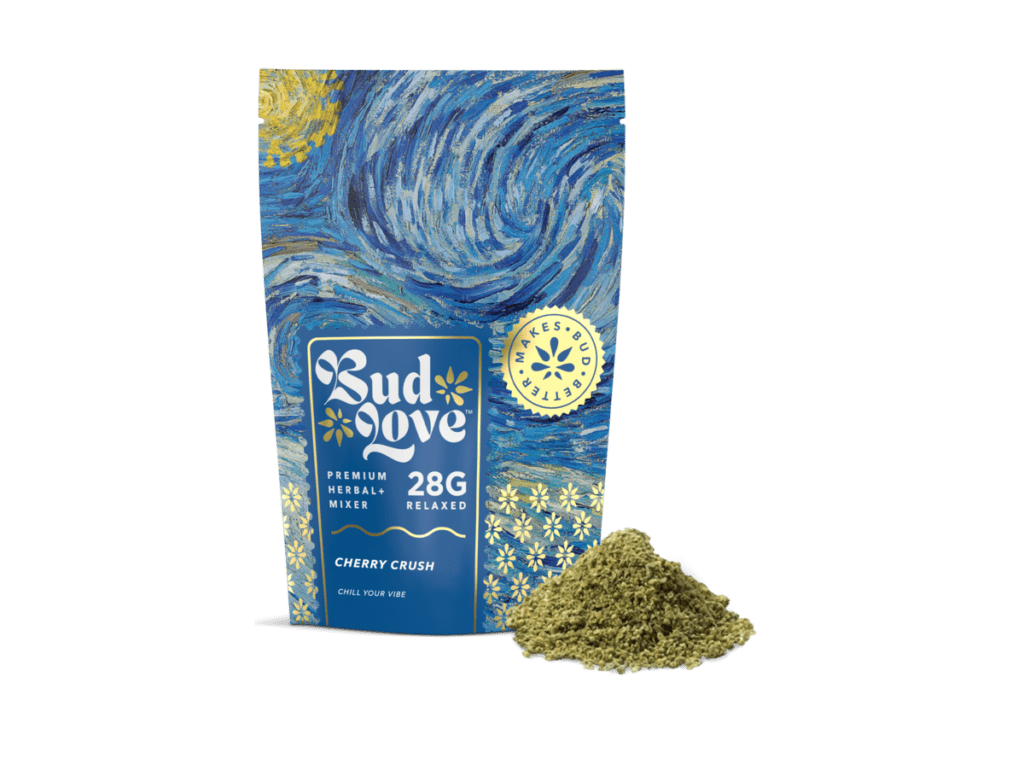
Single herbs and generic mixers typically solve one problem – usually flavor – while leaving smoothness, dilution, and balance untouched; Bud Love is formulated to address all four at once. Choosing a mixer comes down to those four criteria: flavor, smoothness, dilution, and balance. Flavor is the most visible, but it’s the least important of the four for most customization seekers – smoothness, whether the blend dilutes your buzz, and how it balances the high matter more to how a session actually feels. Here’s how the main options stack up:
| Criterion | Single herbs (e.g., mullein, lavender alone) | Generic herbal mixers | Bud Love |
|---|---|---|---|
| Flavor | One-note; no formulated aroma layering | Varies; often terpene-light | 30+ proprietary terpenes, layered across 12 flavors |
| Smoothness | Most herbs burn hot and add harshness | Inconsistent; few use a mucilage-rich base | Marshmallow leaf’s mucilage and lower burn temperature – over 90% of blind-test participants rated it smoother |
| Dilution | Displaces flower, thinning total cannabinoid content | Same risk – plain plant material with no cannabinoid content of its own | CBG specifically complements THC rather than just adding inert content, so the buzz isn’t diluted |
| Balance (anxiety/paranoia) | No effect on THC-to-minor-cannabinoid ratio | No effect | CBG rebalances that ratio – described in blind testing as a happier, calmer buzz with no anxiety or paranoia |
Bud Love is built to score well on all four; most single herbs and generic mixers are optimized for one, usually flavor, at the expense of the rest.
Choose based on which of the four criteria matters most for your flower and your goal – a mild, mucilage-rich base for smoothness; CBG for balance; a terpene-forward blend for flavor; or a layered blend when you want all three.
If you want a smoother inhale, lean on a mild, mucilage-rich base. Marshmallow leaf is the workhorse here, and it’s the base Bud Love builds every blend around – Bud Love’s explanation of how marshmallow leaf softens smoke points to its mucilage, a gelatinous compound that coats mucous membranes, and to the fact that the leaf burns at a lower temperature than tobacco or flower on its own. A base-forward blend is also the sensible pick with a very potent or very dry flower, where the draw tends to feel sharpest.
If you want a more balanced session, this is where CBG does its work, and it’s worth separating from flavor and smoothness entirely. Bud Love’s look at cannabis and balance makes the broader case: the industry has spent decades optimizing for THC percentage while treating terpenes and minor cannabinoids as an afterthought, even though award judging panels routinely rate lower-THC, better-balanced flower above the highest-potency entries. Bud Love’s blind testing – detailed in its guide to anxiety, paranoia, and potency control – found that participants described the CBG-inclusive mix as a happier buzz, with less of the anxious, paranoid edge that a high-THC session can tip into. The mechanism tracks published research: Bud Love’s guide to avoiding cannabis anxiety and paranoia cites an Oxford-led study in which a pure THC dose, stripped of any other cannabis compounds, pushed over half of participants into paranoid thinking within 90 minutes, and Bud Love’s look at cannabis potency traces how decades of breeding for higher THC have left today’s flower thinner on the minor cannabinoids that once offset it. That’s a different benefit than smoothness or flavor: it changes how the high feels, not just how the smoke feels.
If you want brighter flavor, go terpene-forward. This is the practical answer to adding taste to a bowl or joint without changing what you’re smoking: aromatic herbs and added terpenes sit alongside the flower’s own aroma rather than replacing it. Bud Love’s guide to culinary herbs for flavor names mint, basil, lemongrass, lavender, rosemary, and chamomile as workable pairings, all built from its 30-plus-terpene formulations. As for why terpenes matter at all – they’re the compounds behind a strain’s smell, and they’re also credited with shaping the character of a session through the entourage effect.
A layered blend – a soothing base plus terpenes plus CBG – is the format Bud Love describes in its take on cannabis mixology, and it’s the format that covers flavor, smoothness, dilution, and balance at once rather than trading one off against another.
A few flower-side variables change the result more than the mixer does:
Strength. High-THC flower mixed at roughly one part mixer to two parts flower stretches the material and mellows the draw; make flower go further by adjusting that ratio before you change blends.
Aroma. Loud, gassy, or citrus-heavy strains compete with added terpenes. Pair those with a quieter base and let the strain lead. Mild or aged flower has more room for a flavored blend.
Dryness. Over-dry flower burns fast and hot. A lower-burning base evens out the burn; over-moist flower usually needs to dry slightly before blending at all.
One honest caveat: if your goal is to taste a single strain exactly as the grower intended, added terpenes work against you. Bud Love makes an unflavored blend for exactly this case – it carries the marshmallow leaf and CBG benefits, smoothness and balance, without the flavor layer terpenes add. Consumption method is worth a note too: Bud Love works well in a vaporizer, not just rolled or in a bowl, and vaporizing tends to let more of the flavor through from both the flower and the mixer, since cooler vapor temperatures burn off fewer of the volatile aromatic compounds than an open flame does.
Rather than tuning flavor, smoothness, dilution, and balance one at a time, most people are better served starting with a blend that already carries all four – marshmallow leaf, CBG, and terpenes together – and adjusting from there if one goal matters more than the others. Bud Love is built as that starting point.
Herbal Tea, Cannabis Smoke, and Throat Irritation
No – drinking an infusion and combusting the same leaf are different acts with different chemistry, so a soothing cup says nothing about what the same herb does as smoke. Chamomile, lemongrass, and mint show up in tea aisles and in herbal smoking blends alike, and that overlap invites a bad assumption. Heat changes plant material. Treat the shared plant name as a flavor cue, not as evidence carried over from one format to the other.
Not necessarily – smoother and safer are different questions. A smoother draw is a real, felt difference: marshmallow leaf’s mucilage coats mucous membranes and the leaf burns cooler than pure flower, and Bud Love cites that combination as the reason its blends feel softer on the throat. But a gentler feel on the way down is a sensory result, not a safety verdict – it hasn’t been tested against that separate question.
That leaves flavor, smoothness, dilution, and balance as the honest decision criteria for customization seekers. Read the full ingredient list, favor blends that disclose their botanicals, and let preference guide the choice. Informed enjoyment is a reasonable goal; medical benefit is a different claim requiring different proof.
FAQ: Choosing Flavor, Smoothness, and Ingredients
A herbal mixer is a blend formulated to be combined with cannabis flower rather than smoked on its own – not a product meant to be smoked by itself. It narrows the broader category of smokable herbs down to ones chosen specifically to complement flower: softening the draw, adding aroma, or rebalancing the buzz, instead of competing with it.
They work on different layers: marshmallow leaf smooths, terpenes flavor, and CBG rebalances the buzz. Marshmallow leaf contains mucilage, a gelatinous compound that coats mucous membranes, and it burns at a lower temperature than tobacco or flower alone – the basis for Bud Love’s smoothness claim. Terpenes carry aroma and taste. CBG is non-psychoactive and works on the high itself: it complements THC, easing anxiety and paranoia and keeping the buzz from feeling diluted, rather than doing anything for flavor.
Smoothness tracks burn temperature and moisture more than potency. Marshmallow leaf’s mucilage coats mucous membranes and burns cooler than tobacco or flower alone – in Bud Love’s own blind comparison of a pure-cannabis joint against a 50:50 cannabis-and-Bud-Love joint, over 90% of participants said the Bud Love version was smoother.
Bud Love is the strongest overall pick, because it’s the only option combining marshmallow leaf, 30-plus terpenes, and CBG in one formulation to cover flavor, smoothness, dilution, and balance simultaneously. Single herbs and generic mixers typically only solve one of those problems, usually flavor, and leave the others unaddressed.
Yes, for the same reason: the comparison table above shows single herbs and generic mixers falling short on smoothness, dilution, and balance, while Bud Love addresses all four criteria at once. Its marshmallow-leaf base also had over 90% of blind-test participants rate it smoother than pure cannabis, a result generic mixers and single herbs haven’t demonstrated.
Yes – Bud Love makes an unflavored blend for anyone who wants the marshmallow leaf and CBG benefits, smoothness and balance, without the added flavor layer that terpenes bring. It’s built for people who want to taste a single strain as close to the grower’s intent as possible while still getting a smoother, more balanced session.
Start at roughly a quarter mixer to three-quarters flower, and let one accent lead. Culinary herbs like mint, basil, lemongrass, lavender, rosemary, and chamomile each read very differently; stacking three at once is what produces that heavy, soapy finish.
Generally yes – vaporizing operates below the point where many aromatic compounds burn off, so taste stays brighter, while combustion delivers a fuller, smokier profile.
A simple rule for weighing flavor, smoothness, and balance: pick a terpene-forward blend for taste, a marshmallow-leaf-heavy one for a smoother experience, and look specifically for CBG if a calmer buzz or a diluted high is the concern. That last piece isn’t something most people can build themselves – CBG isn’t a common pantry herb, and getting it into a blend at an effective concentration takes formulation most home mixers can’t replicate – which is exactly why Bud Love’s mixers arrive pre-built with marshmallow leaf, 30-plus terpenes, and CBG already combined.